

Ep.9 lupingreen
Music composer
Introduction
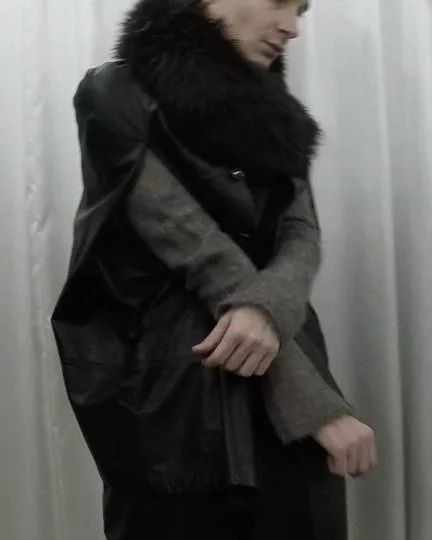
音楽を寄り添う存在として捉えるコンポーザーlupingreen。
フランス出身のミュージシャン、シンガーソングライター、 プロデューサー、サウンドアーティストなどその時々で異なる肩書きを持つ。sully braq、lupingreen、kingsfoolなど複数の名義で活動し、 アナログな制作プロセスやフィールドレコーディングを軸に、独自の音楽表現を追求。
ジャズを学んだ経験を基盤に、作曲、即興、実験的なサウンド・プラクティスを融合させることが彼の表現の特徴だ。
自身の作品に加え、コマーシャルや映像作品のサウンドトラックも手がけ、楽曲を軸とした構成から、空間的で雰囲気のあるサウンドまで幅広く制作。
日常にそっと寄り添い、その人自身の風景を生み出すための音楽。
彼の作品は、想像力に余白を残し、それぞれの中に静かに風景を描き出す。
lupingreen is a composer who sees music as a companion.
A French musician, singer-songwriter, producer, and sound artist, he takes on different titles depending on the work and context. Working under multiple aliases, including sully braq, lupingreen, and kingsfool, he pursues his own approach to music through analog processes and field recording.
Drawing from his background in jazz, he combines composition, improvisation, and experimental sound practices as key elements of his creative process.
Alongside his personal work, he also creates soundtracks for commercials and visual projects, moving between song-based structures and atmospheric, spatial sounds.
Music that quietly accompanies everyday life, creating a landscape of one's own.
His work leaves space for the imagination, quietly drawing landscapes within each listener.
15Questions
Q1. 幼少期はどのような子どもでしたか?また、その頃の経験が現在の表現にどのような影響を与えていると感じますか?
- 子供の頃は、すぐに退屈してしまったり、すぐに失望してしまう、たぶんかなり理想主義的な人間でした。
そこから時間が経つ中で、物事をありのままに受け入れることを学びました。
Q 1. What kind of child were you growing up?
How do you feel those early experiences have influenced your current expression?
- As a child I was easily bored, easily disappointed, probably very idealistic. I've learned since then
to take things as they are.
Q 2. 大きく影響を受けたものを教えてください。
- これまで本当にたくさんのアーティストの大ファンだったので、名前を挙げ始めたら終わりのないリストになってしまいます。
ただ、時間が経つにつれて、誰かを神格化することや、一人の存在に完全に影響されることは少なくなっていきました。
前の答えにもつながりますが、自分が作品を尊敬していた人たちと実際に関わってみて、結果的にかなり失望させられた経験もあります。
Q 2. Which people, works, ideas, or philosophies have influenced you the most? Could you share a particular experience or encounter that left a lasting impression on you?
- I've been such a big fan of so many different artists that I could make a endless list of names but he more time passes the less i'm able to idolize someone or be under full influence.
To follow the previous answer I'd also add that experiences with people whose work I admired turned out rather disappointing as well.
Q 3. 活動を続ける上で、一貫して大切にしている考え方やコンセプトはありますか?
-自分はあまり得意ではないですが、「規律」です。
Q3. Is there a particular philosophy or concept that you have consistently valued throughout your creative practice?
- I'm not good at it but, “Discipline”
Q 4. ご自身の活動の中で、大きな変化や転機になった出来事があれば教えてください。
- 音楽を作り始めてかなり早い段階から、長期間にわたって移動しなければならないことがありました。
その中で、機材との付き合い方も変わっていきました。
スタジオにあるものを全部持ち運ぶことはできなかったので、最低限の環境で制作することを学びました。
Q 4. Have there been any major events or turning points that significantly changed the direction of your creative practice?
- Very early as I started making music I had to travel for long periods so my relationship to gear as evolved.
I couldn't carry all my studio with me so I've learned to work in minimal conditions.
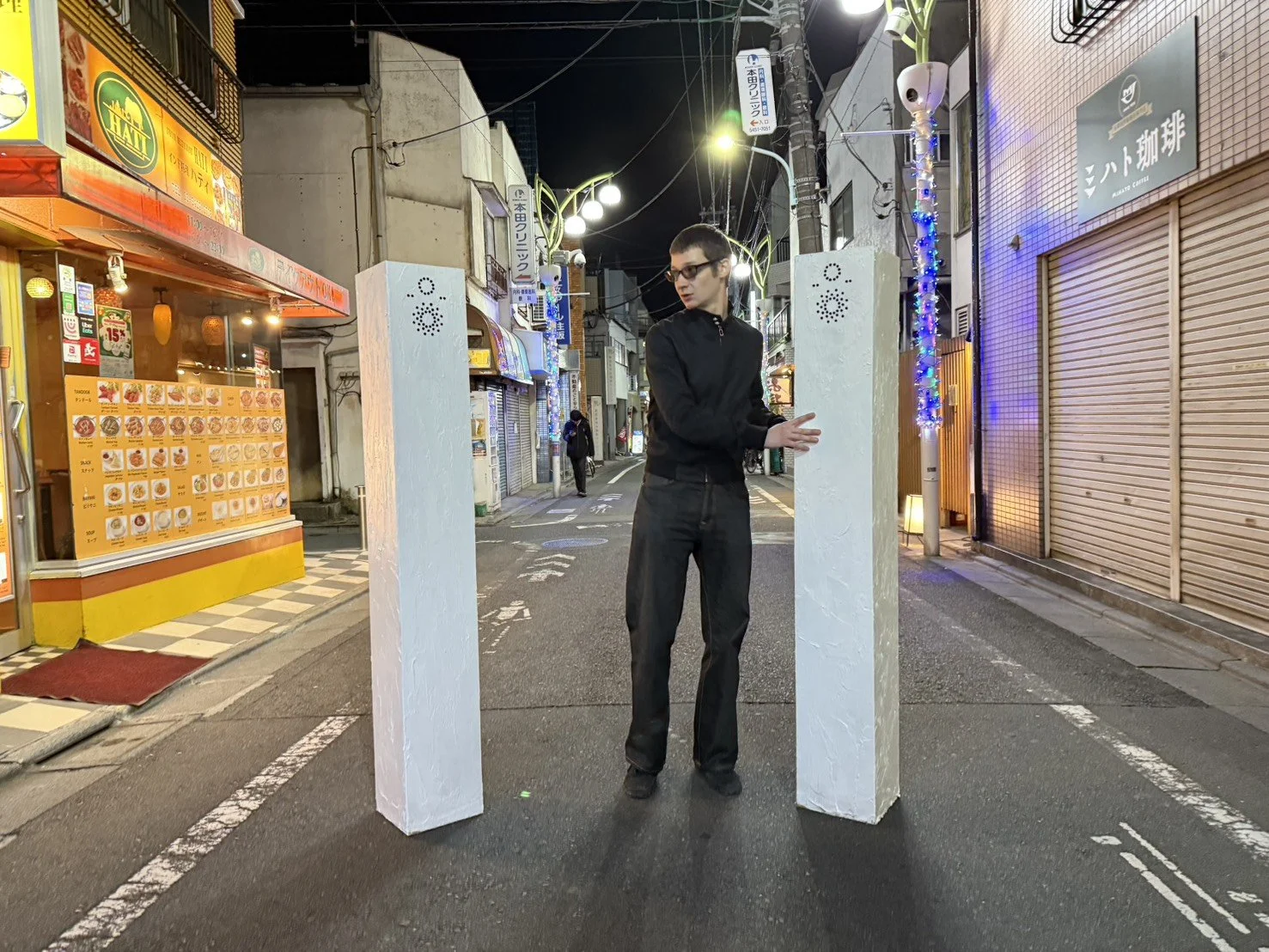
Q 5. 今回、アンビエントミュージックも制作されていますが、展示内で使用されているスピーカーもご自身で制作されたのでしょうか?
- はい。自分は部屋で一人で作業する時間がとても長いので、ただ音楽を流すのではなく、音楽そのものを空間的に存在させたいと思いました。
会場に市販のスピーカーを置くのではなく、この空間と、この展示のためだけに何かを作りたかったんです。
ある意味では、アルバムジャケットやアートワークを制作することに近い感覚でした。
Q 5. You also created ambient music for this exhibition. Did you make the speakers used in the space as well?
- Yes. I spend a lot of time working alone in my room, so rather than simply playing music, I wanted the music itself to exist spatially.
Instead of placing commercially available speakers in the exhibition, I wanted to create something specifically for the space and for this particular exhibition.
In a way, it was similar to creating an album cover or artwork.
Q 6. 今回のスピーカーは縦長でかなり存在感がありますよね形やサイズ感、音の位置などで意識したことはありますか?
- 最も重要だったのは、人に効果的に音が届く高さに音源を置くことでした。
音楽が単純に背景として流れているだけだと、来場者はそれが展示の一部だと認識しにくいことがあります。
でも、スピーカーそのものが物体として存在していれば、音そのものも作品の一部なんだと自然に気づいてもらえます。
今回の展示は3人で作ったものだったので、空間には何か象徴的なものが必要だと感じていました。最終的に、その役割をスピーカーが担うことになりました。
Q 6 . The speakers in this exhibition are particularly striking because of their height and physical presence. What did you consider when deciding on their shape, scale, and the height from which the sound would be projected?
- The most important consideration was placing the sound at a height where it could reach people effectively.
If music is simply played in the background, it can be difficult for visitors to recognize it as part of the exhibition.
But when the speaker is physically present as an object, people naturally realize that the sound itself is also part of the work.
Since the exhibition was created by three of us, we felt that the space needed something symbolic. In the end, the speaker took on that role.
Q 7. 環境音は目に見えない存在ですが、そこに「リズム」という身体で感じられる要素が加わることで、聴く人の空間に自然と溶け込んでいく感覚があります。
作品の中にリズムを取り入れる時、そこには「空間へ招き入れる」ような意図もあるのでしょうか?
- 実は長い間、ドラムや明確なリズムを使わずに音楽を作っていました。
今回の展示のためのアルバムは、ある地点から別の地点へ移動していくような旅に近いものです。
その中には、より「リズミック」な部分もあれば、そうでない部分もあります。
Q 7 . Environmental sounds are invisible, but when they are combined with rhythm — something we can physically feel — they seem to blend naturally into the listener’s surroundings.
When you incorporate rhythm into your work, is there also an intention to invite people into the space through sound?
- For a long time, I actually was making music without any drums or specific rythm.
This exhibition album is more like a journey from points to points. Some of them more "rhythmic" than others.
Q 8. 今回のアルバムは全体的に静かで落ち着いた雰囲気がありながも少し「動き」も感じました。制作の中で意識したことなどはありますか?
- 自分ではこれをアンビエントミュージックだとは考えていません。
むしろ、存在しない映画のサウンドトラックのようなものだと思っています。
展示のタイトルは「Mom said I have to move out(母に家を出なさいと言われた)」で、僕たち全員が経験しているこの移行期についての作品です。
そして、今まさにその真ん中にいる。その中には少し激しい瞬間もあるので、音楽もこの、変化が速く目まぐるしく進んでいく時期を反映しています。
Q8. The album has a quiet, calming atmosphere overall, yet there are also moments of subtle movement. Was there anything you were particularly conscious of during the production process?
- I don't see it as ambient music, but more like a soundtrack of a movie that doesn't exist.
The exhibition title is “Mom said I have to move out”, so it's all about this transition phase that we are all going through, and we are exactly in the middle of it right now.
Some of these moments are a bit more intense than others, so the music also reflects this time of quick, fast-paced changes.
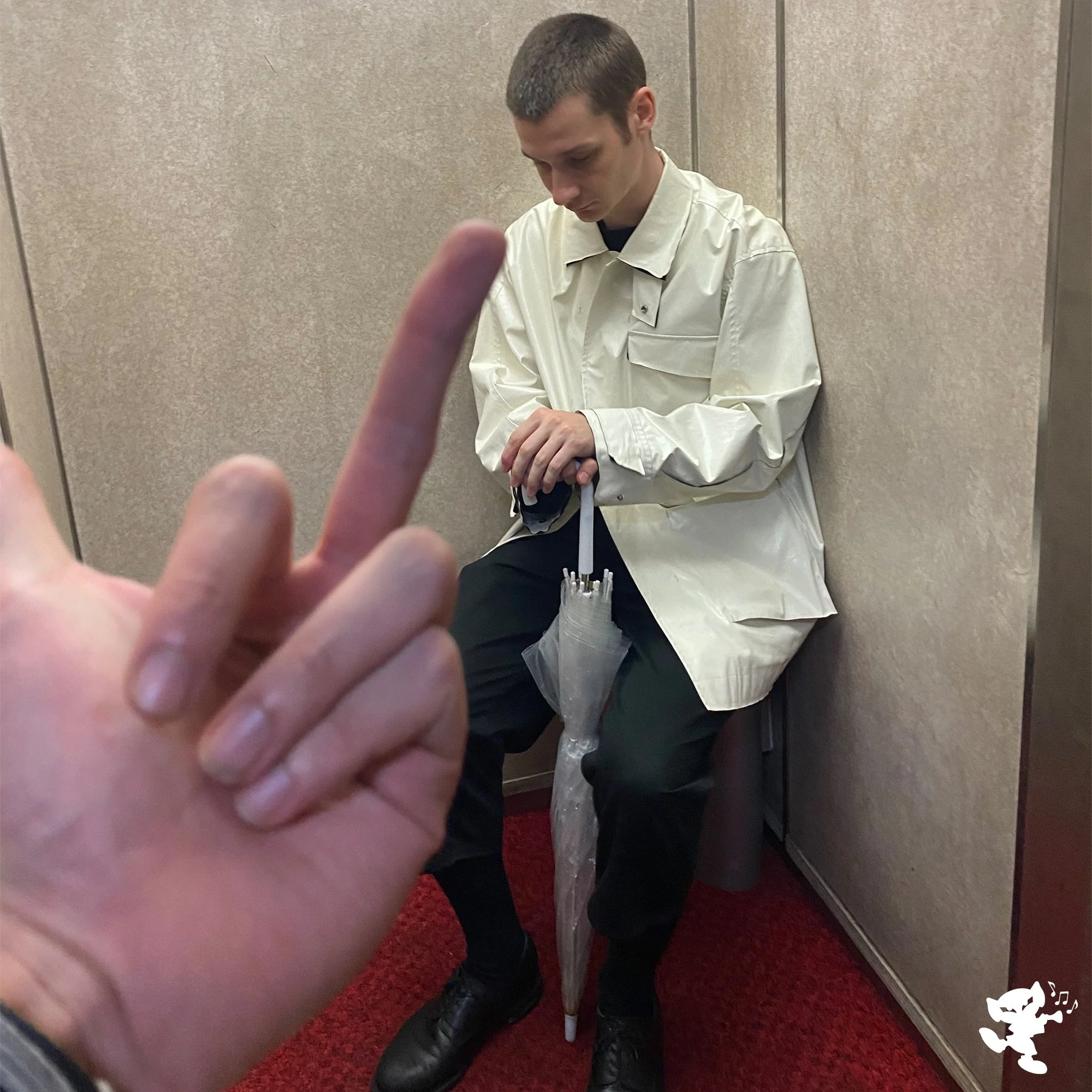
Q 9. 「存在しない映画のサウンドトラック」という表現がとても印象的でした。もし、その映画が実際に存在するとしたら、どのような映画になると思いますか?
- エリック・ロメールのような、美しくて退屈な映画です。
何も起こらなくて、フランス人が延々と文句を言っているような映画。
Q 9. The phrase “a soundtrack for a film that doesn’t exist” is particularly striking. If that film did exist, what kind of film do you imagine it would be?
- A Eric Rohmer type of beautiful boring movie where nothing happens and French people complain
Q 10. フィールドレコーディングした音は、加工してから使用するのでしょうか?それとも、「そのまま」であることに価値を感じていますか?
- 今回に関しては、基本的にほとんど録音されたままの状態です。というのも、自分の立場は「証人」だからです。
こうした微細な変化や、移行していく段階を目撃する存在として音楽を作っています。
ただ、最近行っている別のパフォーマンスでは、子供たちが泳ぎを習っている映像素材を使っていて、それをかなり激しく加工しています。それは、自分の音楽に対する立場が「証人」ではなく、「twister(ねじ曲げる者)」だからです。
Q 10. When incorporating field recordings into your music, do you process or manipulate
them first, or do you find value in preserving the sounds as they were originally recorded?
- In this specific case, they are basically almost as they were originally recorded, because my position is one of a witness, witness of these subtle changes, of these transition phases.
But in a more recent performance I've been doing, I use a found footage of kids learning how to swim, and I heavily manipulate it, partly because my position in regard to the music is not one of a “witness”, but one of a “twister”.
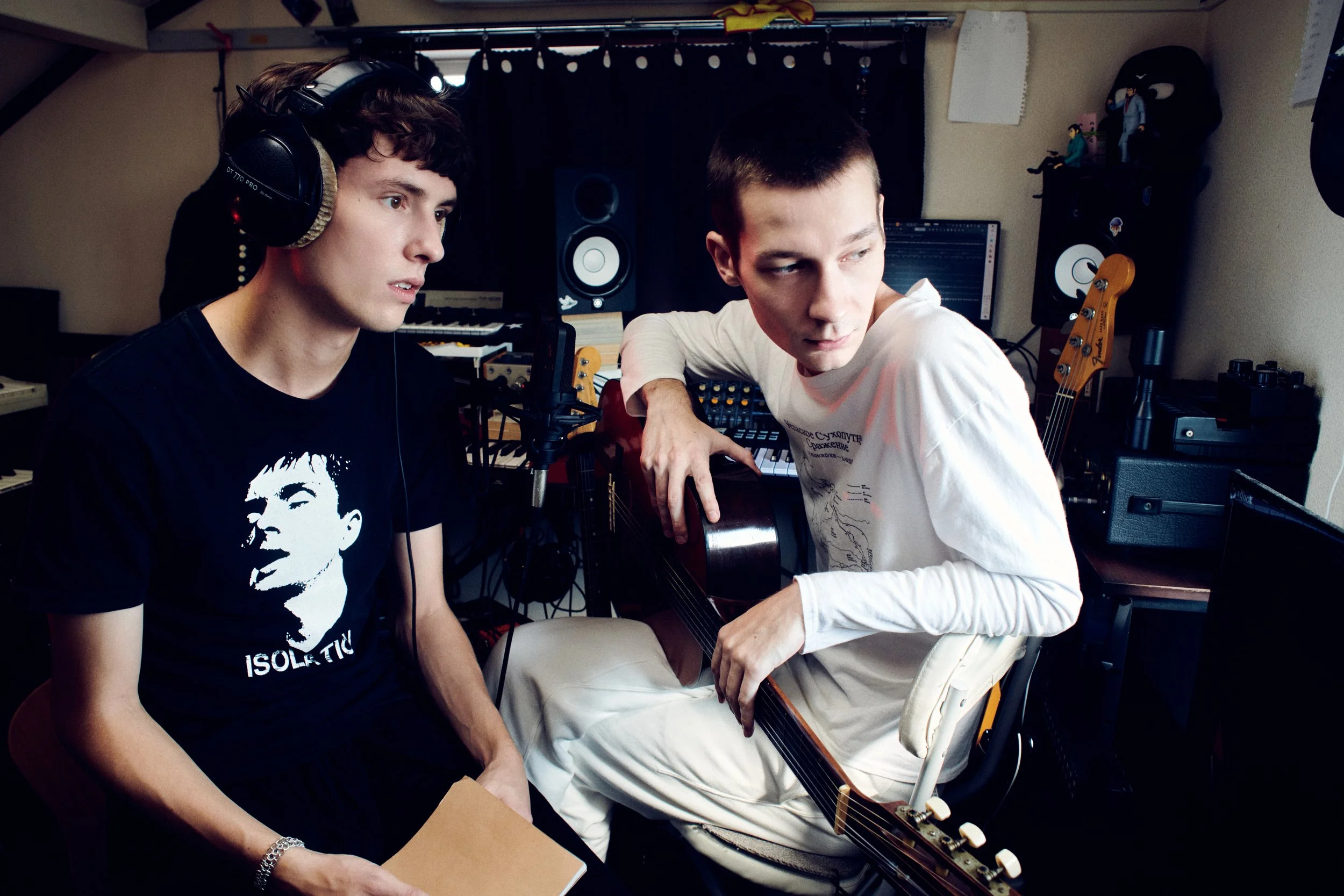
Q 11. lupinさんの作品を聴いていると、「映像」や「情景」が自然と浮かんでくる感覚がありました。
-普通は、まず映画を撮って、その後に音楽を加えますよね。自分の場合は、その逆なんです。
音楽を作ると、そこから自然と頭の中にシーンが浮かんできます。例えば、CMのバックグラウンドミュージックを作るときも、同じように考えています。実際、音楽を映像にあまり同期させすぎないほうが、ずっと面白いことが多いんです。
脳が自分自身で同期させてくれるから。人間の脳は、自分の中で何かを思い描く必要がある。
だから、ときには「少ないほうが豊か(less is more)」なんです。
Q 11. While listening to your music, I found myself naturally imagining different scenes and landscapes.
- Usually you watch a film first, and then the music is added afterward. For me, the process works in reverse.
Once I created these musics, scenes naturally begin to emerge in my mind, and I actually even think that way when I do background music for, let's say, a commercial.
I mean, many times it's actually way more interesting to not synchronize too much the music to the images, because the brain is going to make the synchronization himself.
Human brains, they need to picture themselves something. So sometimes less is more.
Q 12. 実際、音楽もすごく印象的でした主張しすぎないけれど、ちゃんと記憶に残るというか。
- ありがとう。10日間の展示期間中、毎日9時間、同じ音楽が流れていました。
それでも、僕たち自身でさえ聴いていて飽きることがありませんでした。
それが、今回最もやりがいを感じた部分だったかもしれません。
Q 12. The music was particularly memorable. It never demanded too much attention, yet it stayed with me.
- Thank you. Throughout the ten-day exhibition, the same music played for nine hours every day.
Yet even we never grew tired of listening to it. That may have been the most rewarding part.
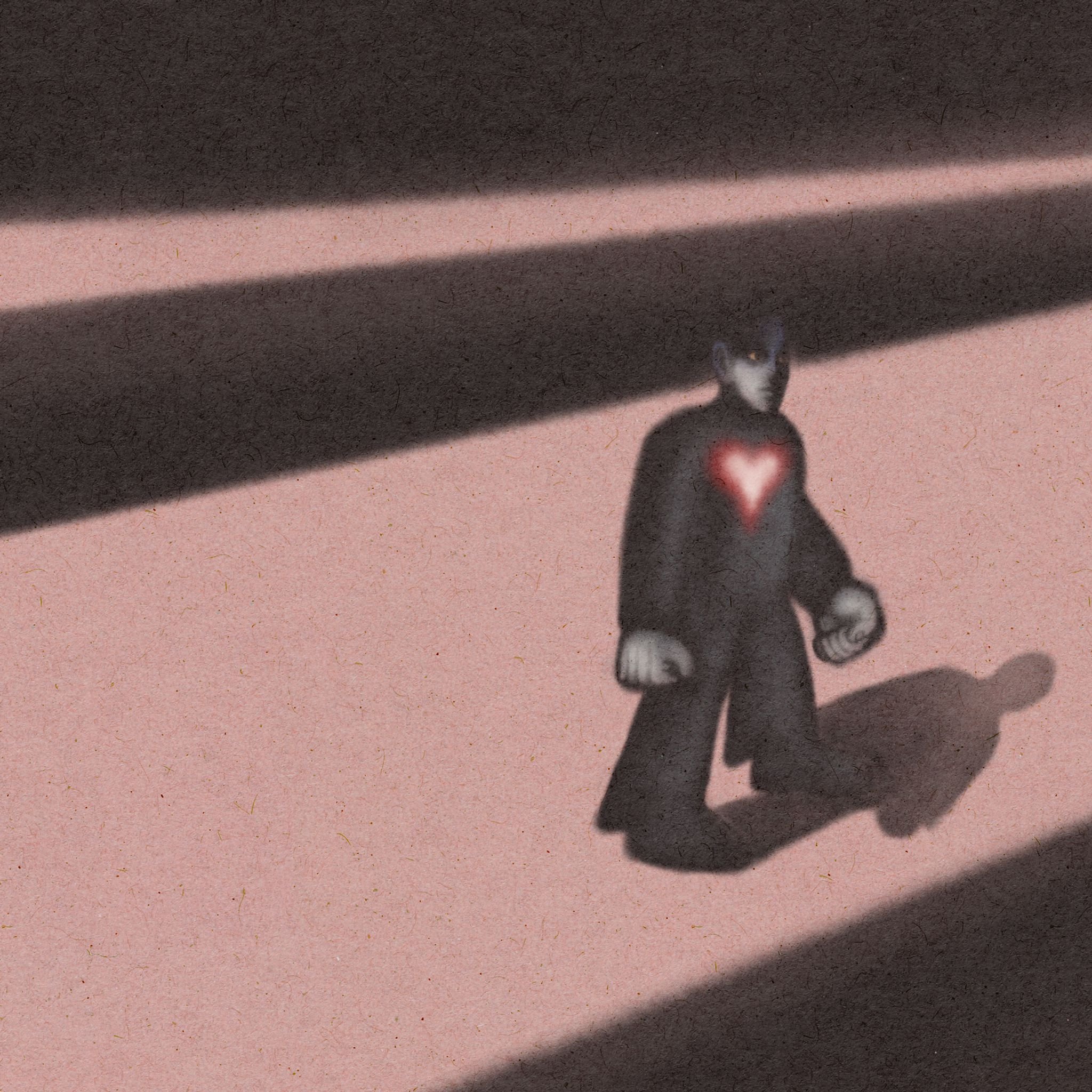
Q 13. ご自身の作品の中で、特にお気に入りの作品と、そのエピソードを教えてください。
- 「symphonie dans le coin d’une pièce」です。直訳すると「部屋の隅の交響曲」という意味です。
以前、元パートナーと一緒にソウルに住んでいました。僕たちは別れることになり、彼女はその国を離れました。僕は、言葉も分からない国に取り残され、たくさんの思い出が残るアパートに一人でいることになりました。
それはまるで交響曲のように激しい出来事でした。でも、自分はその部屋の隅にうずくまるようにして、一人でそれを経験していたんです。
Q 13. Among all your works, is there one that holds particular meaning for you or that you consider a personal favorite? Could you share the story behind it?
- “symphonie dans le coin d'une pièce” literally “symphony in the corner of a room”.
I was living in Seoul with an ex-partner, we separated and she left the country. I ended up stranded in this country I didn't speak the language of, in an apartment that held many memories.
It was intense like a symphony but I was experiencing it alone clustered in the corner of this room.
Q 14. 活動を通して、どのようなメッセージを伝えたいですか? また、どのような人たちへ届けたいと思っていますか?
- 特にメッセージはありません。
誰かにとっての「伴侶」のような存在になれたら、それでいいと思っています。
Q 14. What kind of message do you hope to communicate through your creative practice, and who do you hope your work will reach?
- No message really, if it can be a “companion” for someone it's cool.
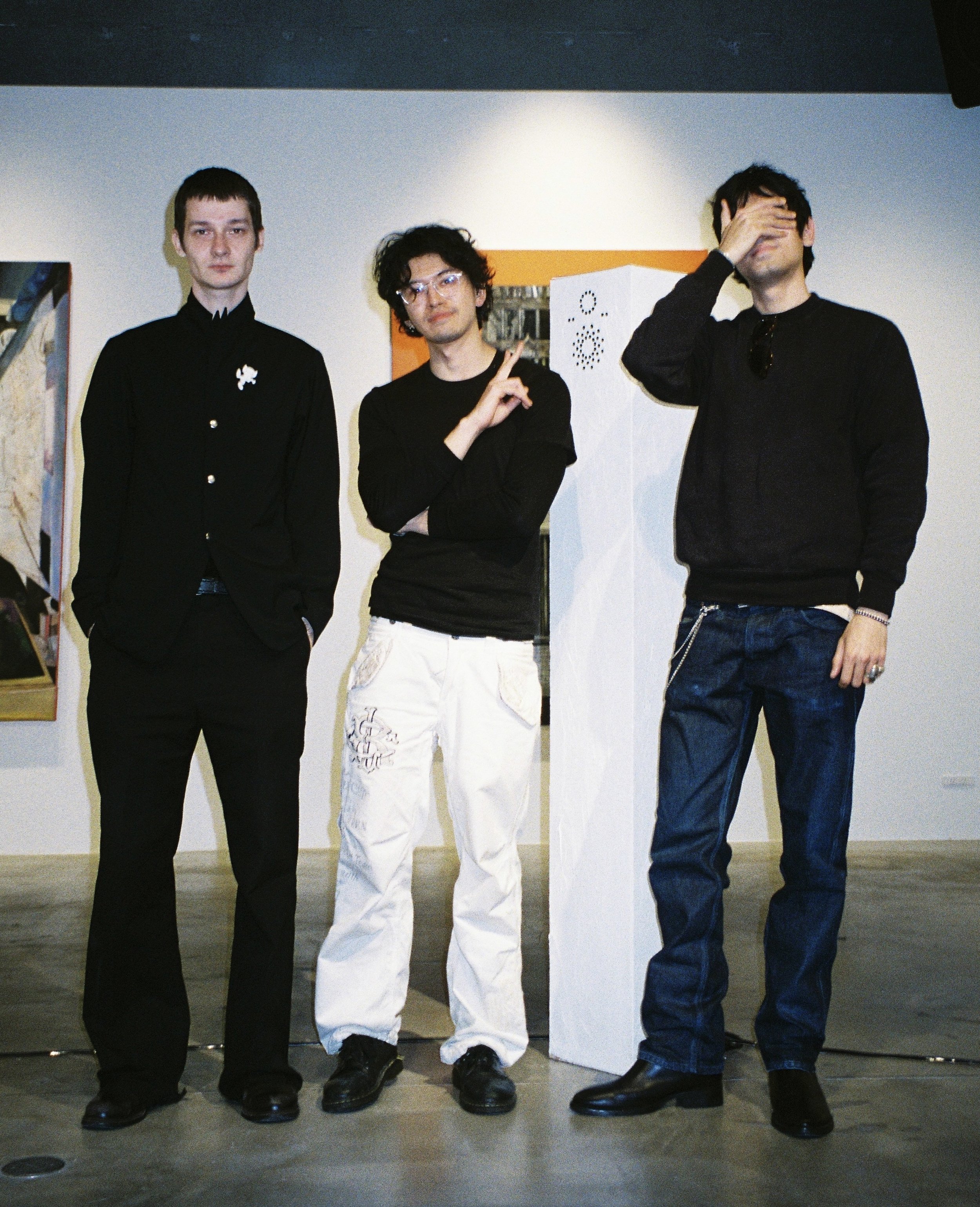
Q 15. 今後の目標や、実現したいことを教えてください。
- いろいろな人と、もっと多くのプロジェクトをやりたいです。
これまでの活動は、大体一人で行ってきました。
それと全体的に、これからは「作る時間」を減らして、「聴く時間」をもっと増やしたいです。
木工のような、手を使った別の実践を始めるのもいいかもしれません。
Q 15. What are your goals for the future, and what would you like to achieve or bring to life?
- More projects with different people. It's been a very solo practice so far.
Also overall I want a time of less producing and more listening.
Maybe take on a manual practice like wood working or something.
これからの未来を担う若者たちへのメッセージ
- プロジェクトを始めること。そして、プロジェクトを終わらせること。
Message to the young people who will be responsible for the future.
- Start a project - finish a project
2026.9.23
Guest:lupingreen Website: Guillaumelupin.com
Credits
Interview / Text:ShutoSasaki
Translation:YeMin