

Ep.8 Victor Takeru
Artist / Painter
Introduction
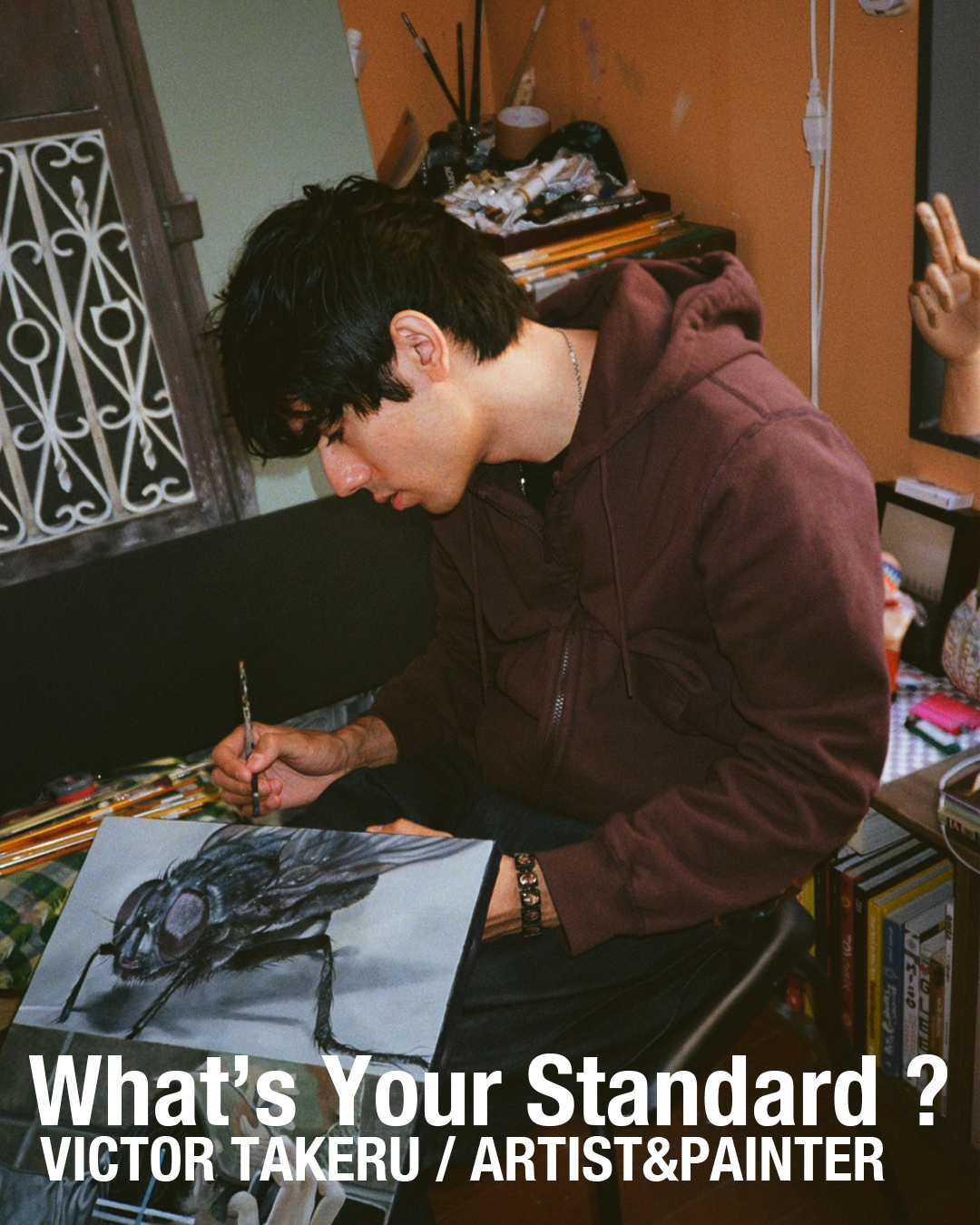
答えを描かないアーティスト、Victor Takeru。
フランスと日本にルーツを持ち、幼少期から環境音楽に親しみながら育つ。グラフィックデザインを学んだのち、21歳で東京に拠点を移す。
彼の作品には、明確な物語や感情の提示はない。
あるのは、抑制された色彩と、時間が止まったかのような空間、そして視線を持たない存在たち。
それらは強く訴えかけることなく、ただ静かに在り続ける。
だが、長く向き合うほどに、鑑賞者の中に個人的な感情や記憶を浮かび上がらせる。
彼が「AMBIENT MUSIC PAINTING」と呼ぶその実践は、音楽におけるアンビエントと同様に、主役としてではなく、空間に溶け込みながら感覚へ作用する。
それは単なる表現ではなく、自己を受け入れるためのプロセスであり、同時に、言語化されない感情を静かに可視化する試みでもある。
An artist who does not paint answers — Victor Takeru.
Born to a French and Japanese background, he grew up immersed in ambient music from an early age.
After studying graphic design, he relocated to Tokyo at the age of 21.
His works do not present clear narratives or explicit emotions.
Instead, they consist of restrained color palettes, spaces where time seems suspended, and figures without a visible gaze.
They do not assert themselves, but quietly exist within the space.
Yet, the longer one engages with them, the more they begin to evoke personal memories and emotions within the viewer.
What he defines as “AMBIENT MUSIC PAITING” operates in a way similar to ambient music
— not as a central subject, but as something that dissolves into the space while subtly shaping perception.
It is not merely a form of expression, but a process of self-acceptance, and at the same time, an attempt to gently visualize emotions that resist language.
15Questions
Q1. 幼少期はどのような子どもでしたか?また、その頃の経験が現在の表現にどのような影響を与えていると感じますか?
-自分は一人っ子だったので、ひとりでいることとか、孤独を自然に受け入れている感覚が、作品にもかなり出ていると思います。セルフポートレートという形も、そこに直接つながっている気がします。
自分のことは誰よりも自分がいちばんよく分かっているので、主題として描くなら自分がいちばん自然なんです。もし他人を描いたら、その人のアイデンティティを少し奪ってしまうような気がしてしまいます。
Q 1. What kind of child were you growing up?
How do you feel those early experiences have influenced your current expression?
I'm an only child, so being alone and appreciating solitude comes through a lot in my work. The idea of self-portraiture is probably directly linked to that, I know myself better than anyone else, so it's the most natural way for me to represent a subject. I'd feel like I was stealing someone else's identity if I painted them.
Q 2. なぜ数ある表現方法の中で「絵」を選び、その中でも油絵という手法を選ばれたのでしょうか? アートという表現方法自体を選んだ理由も含めて教えてください。
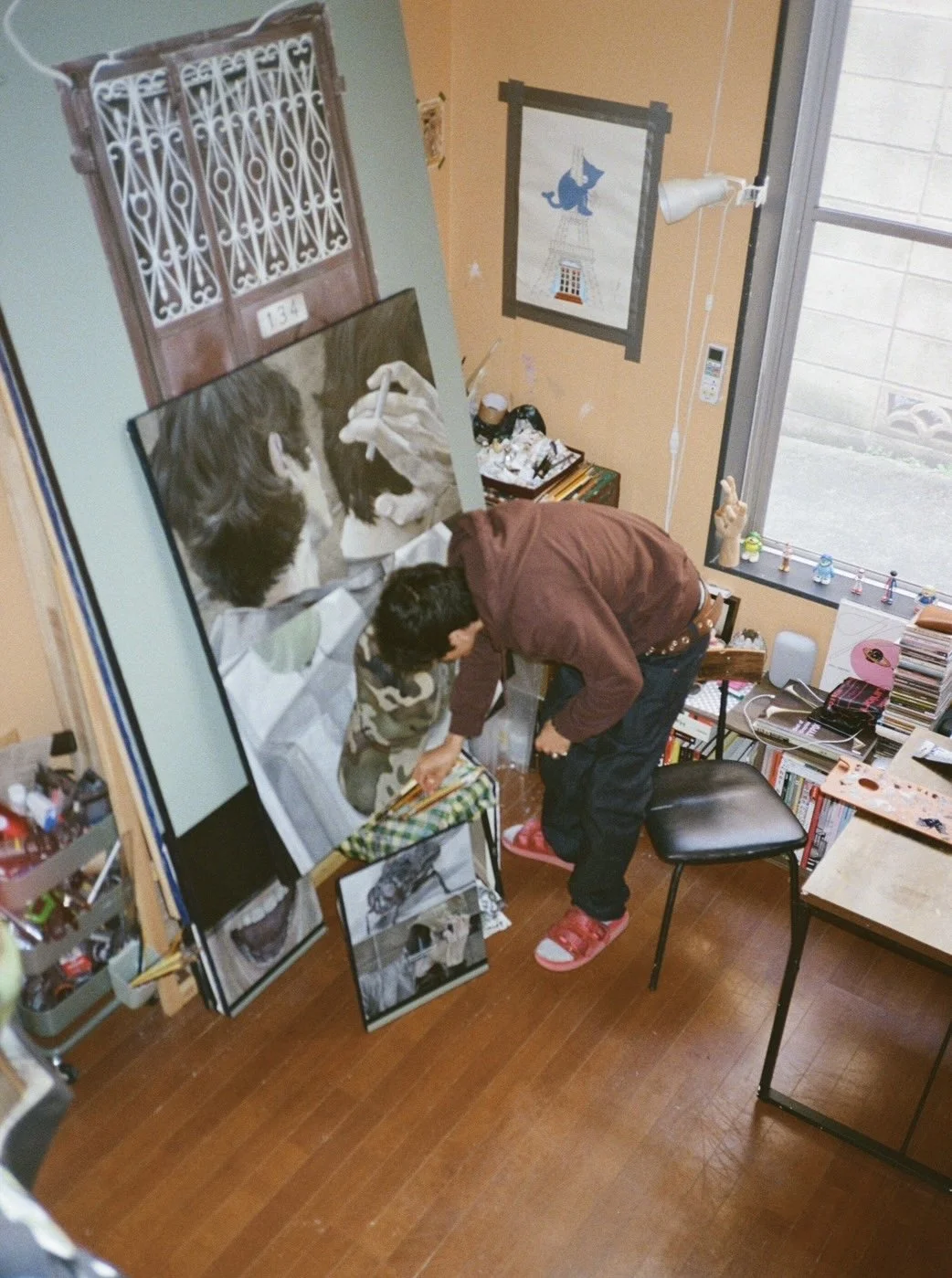
- 物心ついた頃から、鉛筆を持てるようになってからずっと絵を描いてきました。子どもの頃は漫画家になりたくて、そこから自然と絵画にも入っていった感じです。
油絵を始めたのは3年半くらい前です。アクリルではちょっと堂々巡りしているような感覚があって、油絵の持っている可能性の広さにすごく惹かれました。自分にとっては挑戦でもあったし、尊敬しているアーティストの多くが油彩で描いていたことも大きかったです。
絵を描くことだけは、一度もやめたことがありません。友達はスポーツとか楽器をやっていて、自分もいろいろ試したけど、結局最後まで残ったのは絵でした。
Q 2. Why did you choose painting among the many forms of expression available, and within that, why oil painting in particular? Also, could you tell us why you chose art itself as your means of expression?
-I’ve been drawing for as long as I can remember, since I could hold a pencil.
When I was younger, I dreamed of becoming a comic book artist, and then painting came quite naturally. I started oil painting about three and a half years ago. I felt like I was going in circles with acrylics, and the range of possibilities with oil really attracted me. I needed a challenge, and many of the artists I respect work with oil paint.
Drawing is the only thing I never stopped doing. My friends played sports or instruments, I tried several things but eventually quit them all just to keep drawing.
Q 3. ご自身に大きな影響を与えたものと、それにまつわるエピソードを教えてください。
-自分を動かしているのは、もっといいアーティストになりたいっていう気持ちです。
尊敬している人たちみたいになりたい、という思いがずっとあります。
他の人の作品を見ない日は本当にありません。今どんなものが生まれているのか、どんな表現が出てきているのか、常に気にしています。
Q3. What has had a significant influence on you , and could you share any related episodes?
- What motivates me is the desire to become a better artist, to be like those I respect. I don’t go a single day without looking at other people’s work. I stay up to date, I’m aware of everything that’s being done.
Q 4. ご自身の活動を「アンビエントミュージックペインティング」と称されていますが、風や水といった自然の音から、 工事音のような都市のノイズまで含めて、ご自身はどこまでを“アンビエント”として捉え、一枚の絵に表現していますか?
- 「AMBIENT MUSIC PAINTING(アンビエント ミュージック ペインティング)」という言葉は、うまく自分の作品を言葉にできなかったフラストレーションから出てきたものです。シンプルでわかりやすく説明したかったけど、それがなかなかできなくて、、
自分の作品は、アンビエント・ミュージックみたいに、比較的フラットでミニマルな構成だと思っています。雰囲気があって、視覚的ではあるけど、どこか控えめでもある。観る人には、それぞれの感じ方で自由に受け取ってほしいです。
アンビエント・ミュージックと同じで、必ずしも作品が中心にいなくてもいいと思っています。空間の一部として、そんなに強く主張せずにそこにあってもいい。でもその一方で、じっと長く見ていたら、その人の中でいろんな感情が立ち上がってくるようなものでもあってほしいです。
Q 4. Your work is described as “AMBIENT MUSIC PAINTING” To what extent do you consider something “ambient,” from natural sounds like wind and water to urban noise such as construction?And how do you translate that into a single painting?
- The term Ambient Music Painting came out of frustration, I couldn’t define my art clearly and simply.
Like ambient music, my work is relatively flat, with minimal compositions. I want it to be atmospheric, visual, but also discreet. I invite the viewer to interpret my work in different ways.
Like ambient music, I accept that my work may not always be the center of attention, that it can be part of a setting without being closely observed, but also that someone can look at it for hours and experience different emotions.
Q 5. 影響を受けたものの中で、「今はあえて距離を取っているもの」はありますか?
- できるだけ人と比べすぎないようにはしたいんですけど、正直すごく難しいです。
自分にはあまりよくない癖があって、好きなアーティストを見つけると、その人の年齢とか経歴を調べてしまうんです。 それで、「自分と同じ年齢のときに、もうこんなことをやっていたのか」って比べてしまう。
よくないことだとは分かっているし、そこから少しずつ離れたいとは思っています。
Q 5 . Among the things that have influenced you, Is there anything you are now intentionally distancing yourself from?
- I try to compare myself less, but it’s difficult. I have this bad habit: whenever I see an artist I like, I check their age, their background, and compare myself thinking, “Okay, so at my age they were doing this…” It’s unhealthy, and I’d like to move away from that.
Q 6. 作品には「冷たさ」と「安心感」が同居しているように感じますが、これは意図的なものですか?それとも自然に生まれていますか?
-たぶんこれは意図しているというより、自然に出てきているものだと思います。
自分の性格そのものに近いのかもしれません。最初は少し冷たく見えたり、距離があるように思われることもあるんですけど、実際はすごく温かいし、前向きな人間だと思っています。
そういうところが作品にも出ている気がします。ぱっと見たときは、少し暗さとかメランコリーがあるかもしれないけど、よく見ていくと、その奥に温かさとか希望みたいなものもあると思います。
Q 6 . Your works seem to contain both a sense of “coldness” and “comfort.” Is this intentional, or does it emerge naturally?
- It’s natural, I think it’s just my personality.
I may come across as cold and distant at first, but I’m actually quite warm and positive.
I think that shows in my work: at first glance, there’s probably more melancholy and darkness, but after reflection, there’s a lot of hope and warmth.
Q 7. 感情を作品にすることで、吐き出したり、昇華している感覚はありますか?また、その行為自体が、自分自身を救っていると感じることはありますか?
- 逃避」という感覚は、自分の作品の中ではかなり大きなテーマです。
視線のないセルフポートレートの中に自分を置くことで、ずっとどこかへ逃れているような感覚をつくっています。
錆びついて時間を重ねた大きな扉とか、中が空なのかどうかもわからない郵便受けとか、そういうモチーフを通して、自分がいちばん落ち着ける世界を描いています。それは自分を受け入れるための方法でもあるし、ある意味ではセラピーみたいなものでもあります。
これまで、責任とか状況から逃げているって言われたこともありました。だからこそ、それを作品の中に置くことは、自分にとってまずそれに気づくことだし、そこから変わっていくための最初の一歩でもあると思っています。
Q 7 . Do you feel that expressing your emotions through your work allows you to process or sublimate them? And does the act of creating itself ever feel like a form of salvation for you?
- The idea of escape is a central theme in my work.
I stage myself in self-portraits where the gaze is never present, creating a sense of constant escape.
From large, time-worn rusty doors hiding many mysteries to mailboxes whose emptiness is uncertain, I paint a world in which I feel most at peace. It’s a way of accepting myself, it’s a kind of therapy.
I’ve often been criticized for avoiding responsibilities or situations, so yes, putting this into my work is the first step in becoming aware of it and changing.
Q 8. 多くの作品で登場する「猫耳の帽子」というモチーフには、 ご自身のどのような側面が投影されていますか?
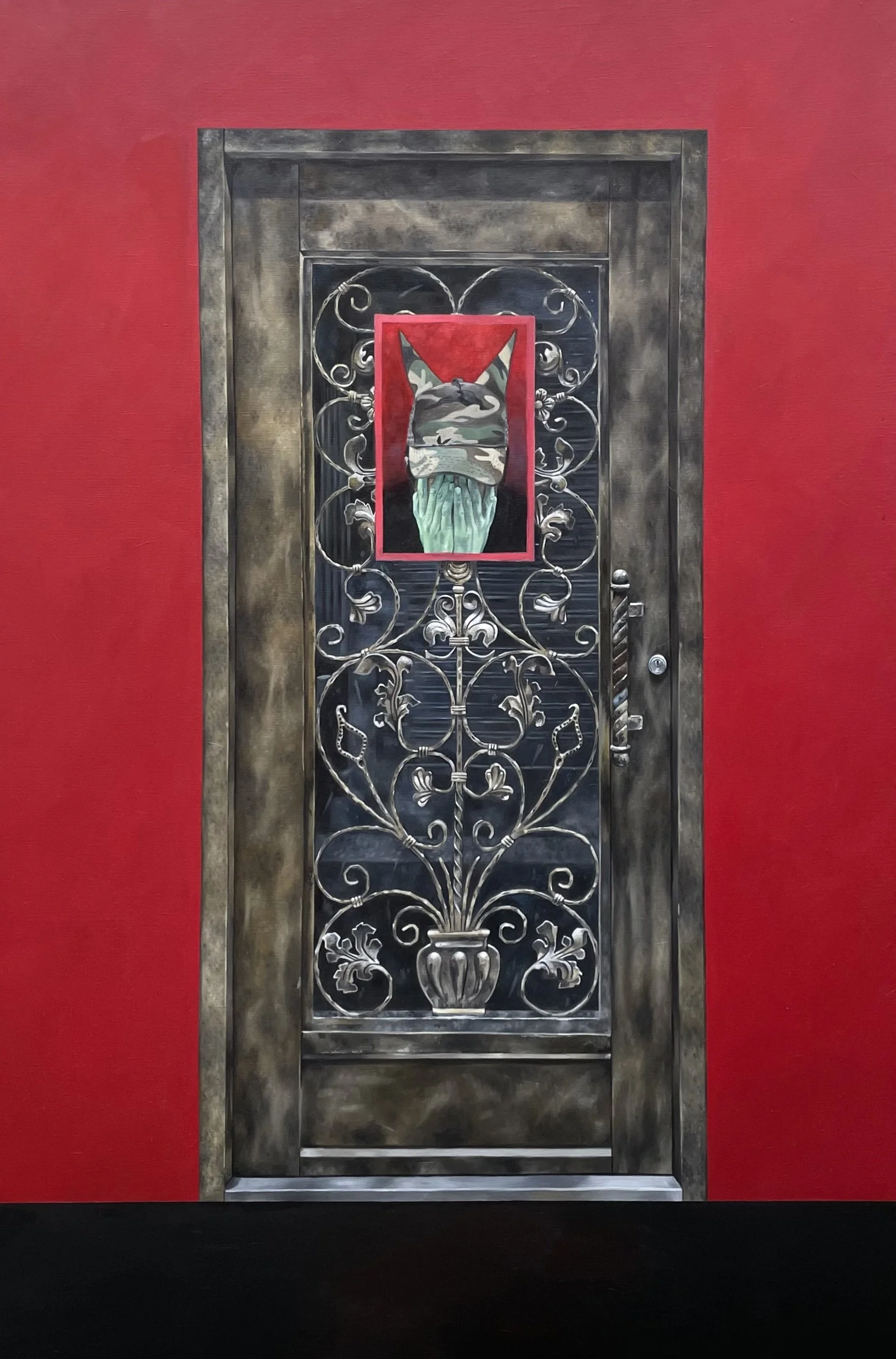
- これらはセルフポートレートですが、目を描かないため、自分を知っている人にしか分かりません。すぐに認識されない状態が気に入っています。
ある意味ではこれも逃避であり、周囲に溶け込み、できるだけ目立たない存在でありたいということです。しかし同時に、緑色の手は非常に目立つため、「見られているが、すべての注目を浴びているわけではない」という状態でもあります。
Q8. What aspect of yourself is projected into the motif of the cat-eared hat?
- These are self-portraits, but since I don’t paint the eyes, only people who know me can tell. I like that I’m not immediately recognizable.
In a way, it’s still about escape, blending into the surroundings, being as discreet as possible. But paradoxically, with the green hands, which are very visible, it’s like being seen, just not having all the attention on me.
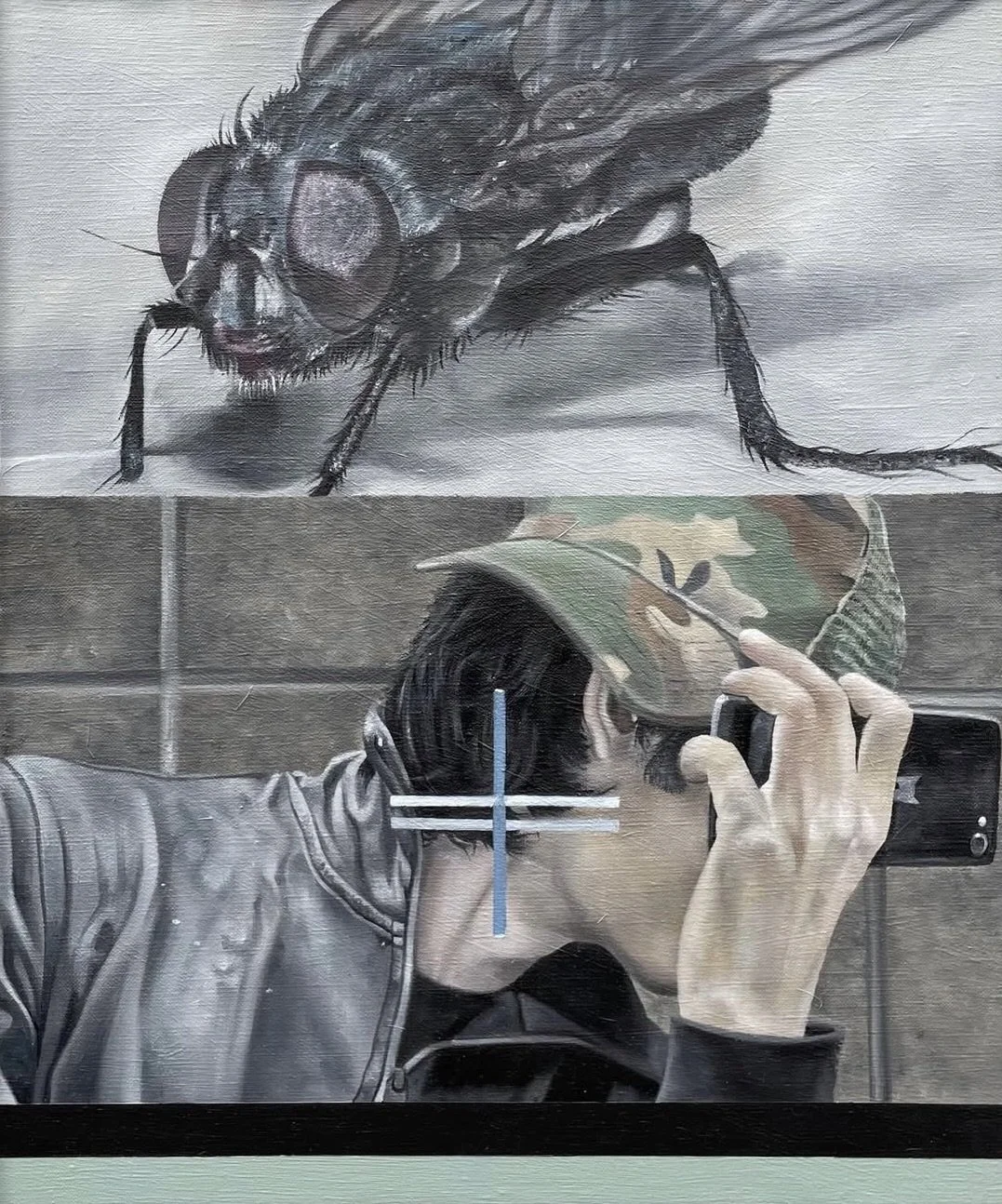
Q 9. あえて目元を隠して描くことで、鑑賞者にどのような体験を与えたいと考えていますか?
- 人は無意識に、相手の視線や目の動きを追ってしまうものだと思っています。
目が見えるだけで、感情や意図は強く伝わってしまう。
だからこそあえて目元を隠すことで、余計な情報を与えず、作品そのものに向き合ってほしいと考えています。
その場の空気感や温度、そして自分が込めたものが、見る人の中で自然と感情として立ち上がることを大切にしています。
Q 9. By hiding the eyes in your figures, what kind of experience do you want to give the viewer?
- I think people unconsciously pay attention to others’ gaze and eye movements.
When the eyes are visible, emotions and intentions are conveyed too strongly. By intentionally obscuring them, I want to avoid giving unnecessary information and allow viewers to face the work itself.
I value the idea that the atmosphere, temperature, and what I’ve embedded in the piece will naturally emerge as emotion within the viewer.
Q 10. 作品における黄色の空間は、何かを暗示しているのでしょうか?
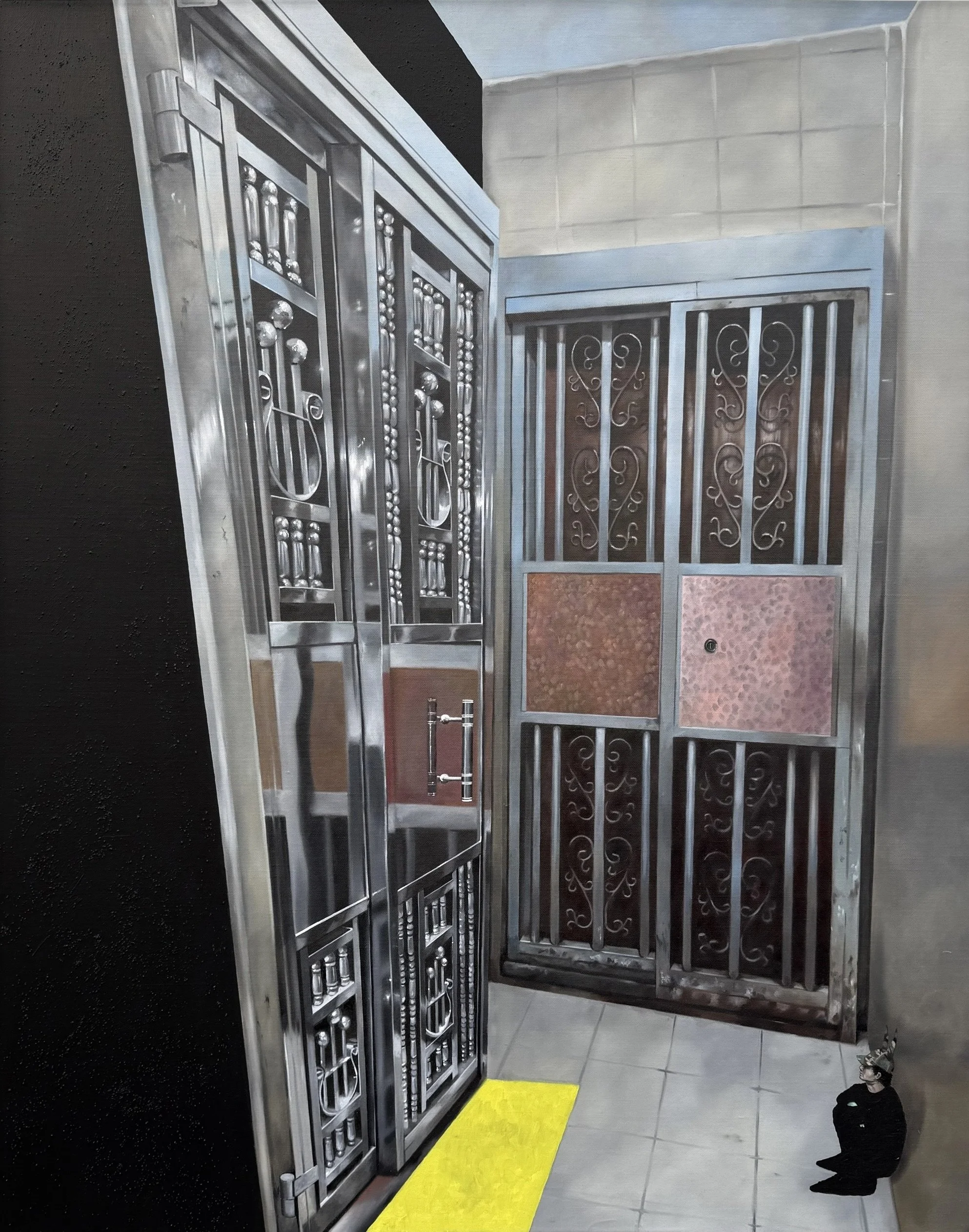
- 作品の中にある黄色の空間は、「そこに行けば何か良いことが起こる」と分かっている場所の象徴です。
それでも人は、その一歩を踏み出さず、手前で立ち止まってしまうことがある。
ドアを開ければ何かが変わるかもしれないのに、動けずにその場に留まってしまう。そういった感覚を表現しています。
これは自分自身の感覚とも重なっていて、「やれば良いことが起こる」と分かっていながら、考えすぎてしまい、結果的に何もできないまま終わってしまうことがある。誰かに迷惑をかけたくないというよりも、思考が巡りすぎて、最終的に“何もしたくなくなる”状態に近い感覚です。
そのため、後ろ向きというよりは、どこか内側にこもってしまうような状態。ただ、それ自体をネガティブに捉えているわけではなく、その感覚を理解し、作品として表現することはむしろポジティブな行為だと考えています。
作品に登場する「ドア」や「階段」も、そうした心理状態の象徴です。進むことも、その場に留まることもできる中で、どちらが正しいか分からないまま立ち止まっている。
そこには焦りはなく、時間が止まっているような静かな感覚があります。一見するとハッピーな作品ではありませんが、その静けさの中にある“落ち着き”や“安心感”を大切にしています。
「寂しい」ではなく、「なんとなく落ち着く」と感じてもらえること。ネガティブとポジティブが同居する、曖昧で穏やかな感情を表現しています。
Q 10. Do the yellow spaces in your work symbolize a state of knowing that something may change if you move forward, yet being unable to take that step?
- The yellow spaces in my work represent places where you know something good might happen if you go there.
And yet, people sometimes stop just before taking that step.
Even though opening the door could change something, they remain where they are.
That’s the kind of feeling I’m trying to express.
It overlaps with my own experience — knowing that taking action could lead to something positive, but overthinking to the point where I end up doing nothing.
It’s less about avoiding responsibility, and more about reaching a state where I simply don’t want to do anything at all.
So rather than something negative, it feels more like turning inward.And I don’t see that as negative — understanding that state and expressing it through my work feels like a positive act.
Elements like doors and stairs also reflect this psychological state —being unable to decide whether to move forward or stay.
There’s no sense of urgency, just a quiet feeling, as if time has stopped.The work may not appear “happy,” but I value the sense of calm and comfort within that stillness.
Rather than “lonely,” I want it to feel quietly settling.It’s about expressing a gentle, ambiguous emotion where negative and positive coexist.
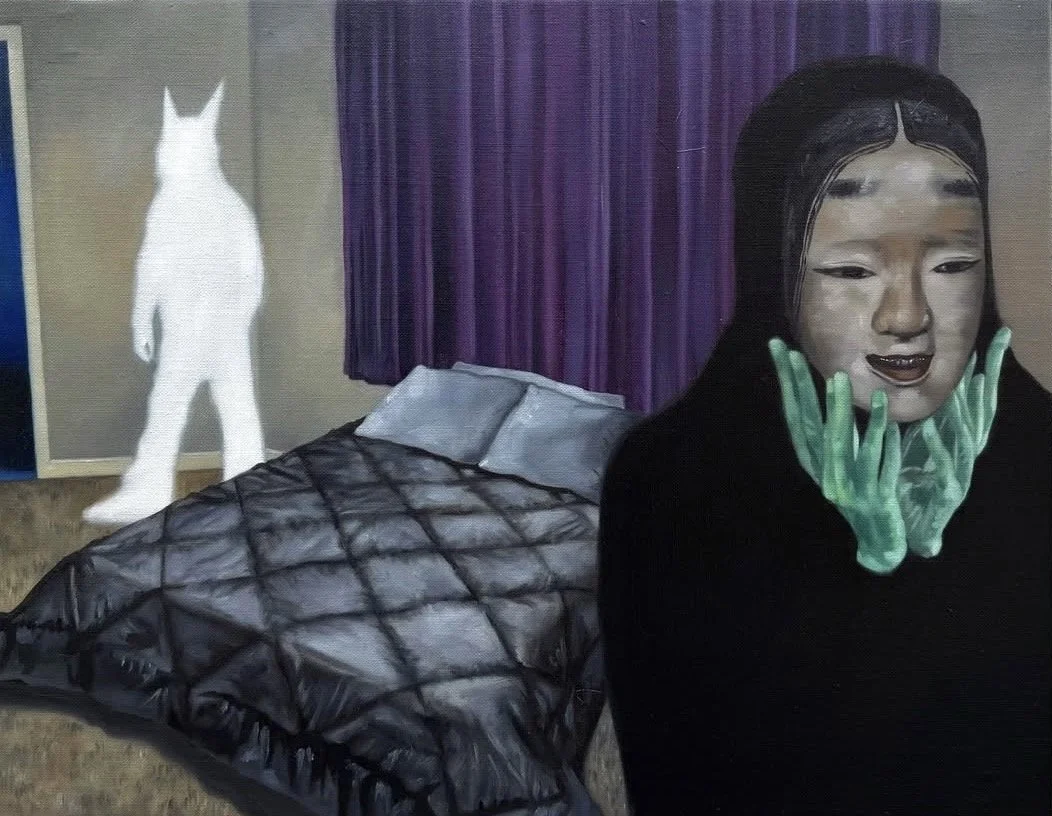
Q 11. ご自身の作品の中で特にお気に入りの作品と、その理由やエピソードについて教えてください。
-これはすごく難しい質問です。たぶん、いちばん好きなのは、まだ完成していない作品なんじゃないかと思います。これから生まれる作品への期待みたいなものが、自分を動かしているところがあります。
最近は特に能にすごく惹かれています。仮面とか、何もない舞台の空白によって、観る人が自由に情景を想像できるところがすごく好きです。そういう感覚は、自分の考えるアンビエント・ペインティングにもかなり近いと思っています。
Q 11. Which of your works is your favorite? Could you share the reason or any story behind it?
- That's a hard one.
I think my favorite works are the ones I have in mind but haven't finished yet. It's the excitement of future creations
that drives me. Right now, I'm very drawn to Nohtheatre, its masks, the emptiness of the stage that allows the viewer to imagine the setting. It's very much ambient music painting, actually, lol.
Q 12. ご自身の活動を「アンビエントミュージックペインティング」と定義していましたが、アンビエントという言葉はどのような意味になりますか?
- 自分にとって「アンビエント」は、雰囲気そのものです。
何かを強く主張するというより、空間の中にムードを生み出すもの、という感覚です。
Q 12. You define your practice as “AMBIENT MUSIC PAINTING.” What does the word “ambient” mean to you?
- For me, “Ambient” is about atmosphere.
It’s something that creates a mood without being the center of attention.
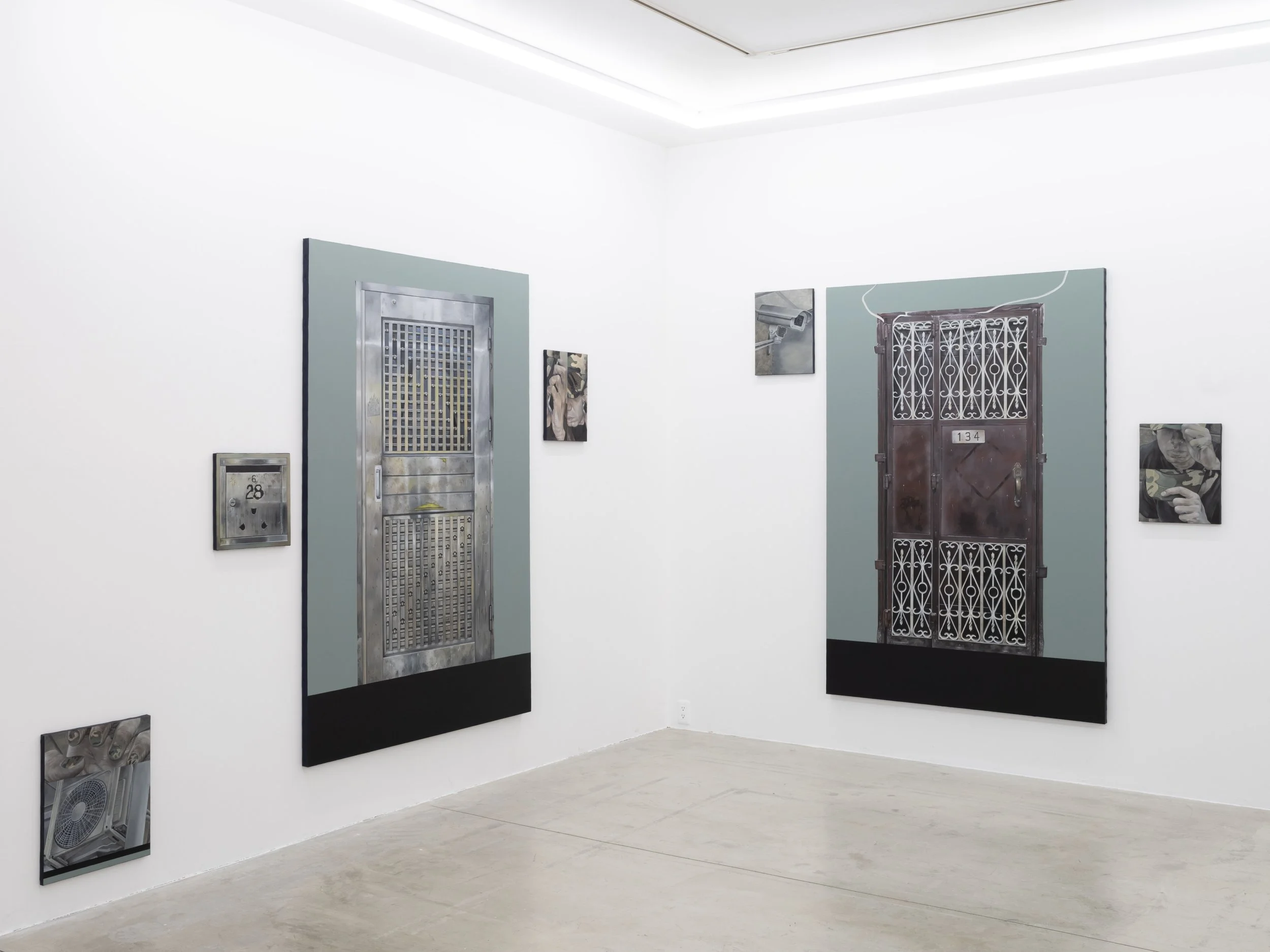
Q 13. 曖昧にすることで、無意識に触れたくない部分を守っている感覚はありますか?また、その防御と表現のあいだで、「見せるもの」と「隠すもの」はどのように決めていますか?
- まだ自分のすべてを見せているわけではありません。もちろん自分を守るためでもあるけど、それ以上に、絵を描くことを通してまだ自分自身のことを知っている途中なんだと思います。
自分の中には、まだちゃんと理解できていない影みたいな部分があります。それがいつか作品の中にはっきり出てくるのかもしれないし、出てこないのかもしれません。
Q 13. By keeping things ambiguous, do you feel that you are protecting parts of yourself?
How do you decide what to reveal and what to conceal?
- Yes, I don’t reveal everything yet. Beyond protecting myself, it’s also that I’m still getting to know myself through painting.
There are still many shadowy parts of me I don’t understand, maybe one day they’ll appear in my work, maybe not.
Q 14. 作品に登場する「何か」は生きているものではないとのことですが、それらは描かれたというよりも、もともとそこに在ったものが可視化されたような印象を受けました。
海外的な“Ghost”のように存在を主張するものではなく、日本的な「幽霊」のように、ただ静かにそこに在り続けている“不安感そのもの”に近いとも感じています。ご自身にとってそれらは、“描く対象”なのでしょうか?
それとも空間や感覚を構成する一要素としての“実態”に近いのでしょうか?
- 彼らは生きてはいません。キャンバスの上にいて、時間の中で止まっている存在です。
でも、それを生きていると感じるかどうかは、観る人次第だと思っています。絵の中から音や都市のノイズみたいなものを想像して、そこに生命を感じる人もいるかもしれないし、そうじゃない人もいる。その自由は観る人に委ねたいです。
Q 14. The beings in your work feel less like subjects and more like presences within a space. For you, are they something you depict, or something that already exists?
- They’re not alive because they’re on canvas, they’re frozen in time and can’t move.
It’s up to the viewer to decide whether they are alive or not. The viewer is free to interpret the emotions within the work. Some might almost hear distant sounds, like urban noise coming from the paintings, giving them life, others won’t. I leave that freedom of imagination to the viewer.
Q 15. 今後の目標や、野望があれば教えてください。
- まずは、もっといい作品をつくることです。
その上で、自分が本当に尊敬しているギャラリーに認められたいと思っています。
Q 15. What are your future goals or ambitions?
- First and foremost, to create better work, and then to gain recognition from galleries I respect.
これからの未来を担う若者たちへのメッセージ
- 人に自分の世界が理解されるまで、好きなことをやり続けろ。
Message to the young people who will be responsible for the future.
- Do whatever you like until people understand your universe.
2026.5.12
Guest:Victor Takeru & AMBIENT MUSIC PATING